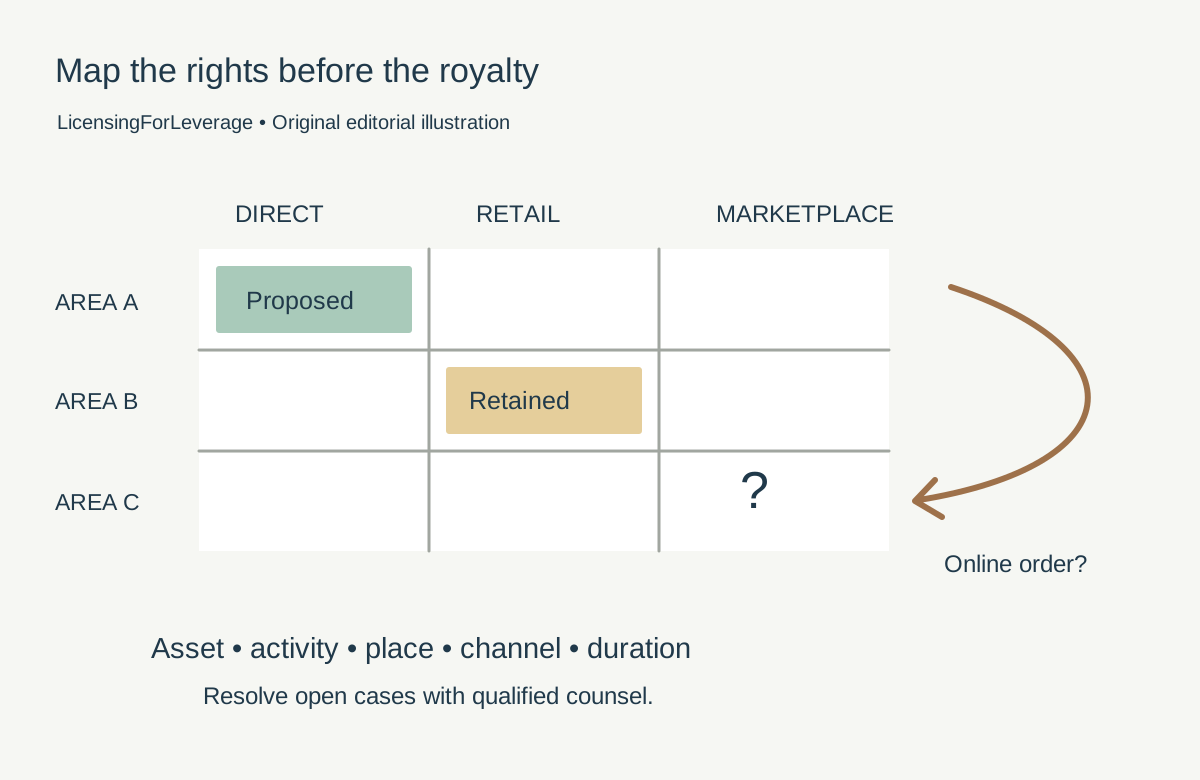
Define a proposed license by the asset, permitted activity, territory, channel, customer group, and duration before negotiating a headline royalty. “Exclusive in North America” leaves too many business questions unanswered if the parties have not discussed online orders, marketplaces, existing accounts, sublicensing, and the licensor's own activity. Build a rights map that counsel can translate into an agreement suitable for the relevant jurisdictions.
TL;DR
List exactly what the licensee may use, make, distribute, or sell, and where and through which channels. Record retained rights and existing commitments separately. Test the proposed boundary against realistic orders, including online and cross-border scenarios. Have qualified counsel review enforceability, competition rules, intellectual-property coverage, and quality control. The map is a negotiation aid; it does not itself grant rights or replace a signed agreement.
At a glance
| Rights dimension | Question to resolve | Example issue to send to counsel |
|---|---|---|
| Asset and version | Which IP and materials are included? | New editions and derivative material |
| Territory | Which geographic places are covered? | Customer address differs from delivery address |
| Channel | Which routes to market are allowed? | Direct site versus third-party marketplace |
| Activity and customer | What may the licensee do, and for whom? | Manufacturing rights versus resale rights |
| Exclusivity | Who else retains or receives rights? | Licensor's existing customers and contracts |
| Duration and change | When do rights begin, end, or change? | Renewal, underperformance, and inventory sell-off |
Start with the asset and the activity
Identify the actual intellectual property and supporting materials. A trademark, patented invention, training curriculum, software application, and confidential manufacturing process involve different rights and obligations. A license to display a mark should not be assumed to include ownership of the underlying content. List the relevant registrations, versions, schedules, and material descriptions for professional review, without disclosing confidential substance prematurely.
Then state the intended activity in everyday language: manufacture a defined product, distribute approved copies, deliver a specified training program, or operate a service under the mark. WIPO's technology-transfer agreement overview describes how licenses can vary by purpose, territory, and field of use. Use those dimensions to expose business assumptions before asking counsel to draft the legal grant.
Make geography precise enough to discuss exceptions
Write the proposed countries or other defined areas rather than relying on an informal region name. Ask how existing territories are described in other agreements and whether any overlap exists. Intellectual-property protection and enforcement need jurisdiction-specific review; the presence of a customer in a place does not establish that the licensor holds every relevant right there.
Create an illustrative order scenario. A customer located in one country orders through a website operated in another and requests delivery to a third. Ask which facts would matter under the proposed agreement and applicable law. Do not resolve the question by casually declaring that the billing address always controls. Your purpose is to identify the decision that the written agreement must handle.
Treat online activity as a channel question
List the channels the parties actually expect to use: the licensee's own site, distributors, retail stores, enterprise sales, mobile apps, third-party marketplaces, or affiliate relationships. “Online sales” may conceal several different commercial arrangements. Ask who is the seller of record, who controls the listing, who provides support, and whether another party receives rights to the IP or merely purchases an authorized product.
Discuss advertising and fulfillment separately from the sale itself. A globally visible page, a cross-border shipment, and targeted marketing outside a proposed territory are not necessarily the same legal question. Counsel should evaluate any restrictions under applicable competition, distribution, and intellectual-property rules. Do not assume every desired territorial or channel restriction is enforceable merely because both parties are willing to sign it.
Record retained rights in plain language
Ask whether the licensor wants to continue serving existing accounts, sell directly, use the asset internally, conduct research, or license another field of use. List those intentions explicitly in the working map. An existing customer exception needs a way to identify the covered accounts and understand what happens when that customer adds locations, buys a different product, or changes its corporate structure.
WIPO's licensing overview distinguishes licensing from assignment and discusses different exclusivity arrangements. Labels such as exclusive, sole, and non-exclusive should lead to a precise review of the actual grant and retained rights. Do not rely on the label alone to determine whether the licensor may continue operating in the same market.
Connect exclusivity to operational capability
Ask why exclusivity is commercially necessary and whether the proposed licensee has the capacity to use the requested scope. A regional distributor with limited service coverage may not need every global channel. Discuss narrower initial scope, staged expansion, or measurable performance obligations as business options for counsel to evaluate. These are negotiation possibilities, not universal contract recommendations.
If the parties discuss milestones, define the evidence and measurement period. “Strong market development” is hard to review. A documented launch, specified support readiness, or a mutually defined reporting obligation is more concrete. Ask how a missed obligation would be handled, including notices, cure opportunities, and any change in rights. Avoid promising that a minimum royalty or exclusivity clause ensures commercial success.
Include quality control and third parties
For brand-related permissions, discuss approval processes, brand-use rules, inspection or review rights, complaints, and correction responsibilities with trademark counsel. Quality control is an operational commitment as well as a drafting issue. Identify who will perform reviews and how much time that work requires. A licensor who cannot support the promised review process should revise the commercial plan before making commitments.
Map any proposed distributor, manufacturer, trainer, or subcontractor. Ask whether the party needs a sublicense, approved supplier status, or another arrangement. Do not assume that a licensee can pass rights onward automatically. Clarify the intended flow of confidential information, customer support, records, and corrective action so counsel can identify appropriate approvals and obligations.
Test the map with realistic transactions
Run several hypothetical transactions through the proposed scope: an ordinary domestic order, a marketplace order, a multinational customer request, an existing-account renewal, and an order received near termination. Mark each allowed, excluded, or unresolved as a business intention. Keep legal conclusions separate until counsel has reviewed them. Unresolved cases are useful findings, not defects to hide before negotiation.
For example, a training-content owner may intend to license live corporate workshops in one country while retaining consumer self-study courses. A customer then asks to record a workshop and distribute it internationally. The request crosses activity, format, and territory boundaries at once. The rights map makes those questions visible before someone answers yes in a sales conversation.
Plan changes and the end of the relationship
Ask how the parties will document a new channel, additional territory, revised asset, or change in permitted use. Informal email enthusiasm should not be mistaken for an effective amendment. Counsel should define who has authority to approve changes and the required form. Maintain a current schedule of rights so sales and delivery teams can find the operative scope.
Discuss the treatment of pending orders, inventory, digital access, customer support, confidential material, and brand use after expiration or termination. Tax and accounting treatment of payments also needs professional review, especially across borders. Do not assume a sell-off period, automatic renewal, or continuing royalty obligation exists unless the agreement and applicable law support it.
FAQs
Should territory follow the website's domain name?
A domain name alone rarely describes the whole commercial arrangement. Include customer, marketing, ordering, delivery, and support scenarios in the discussion with counsel.
Can I use this table as my contract?
No. It captures business intent and open questions. Qualified counsel must assess the rights, jurisdictions, obligations, and enforceability and prepare the actual agreement.
What should I prepare for the next negotiation?
Bring an asset list, proposed rights map, existing commitments, retained-rights priorities, and several realistic order examples. Keep confidential materials protected while discussing scope.
Next step and disclaimer
Complete the map for one proposed partner and highlight every unresolved case. Visit our licensing articles for related preparation. This educational guide is not legal or tax advice and provides no royalty, earnings, passive-income, or enforceability guarantee. Obtain advice from qualified professionals for the specific asset, transaction, and jurisdictions before granting or relying on rights.
Turn the idea into a business plan.
LicenseOS guides you from asset discovery through pilot planning and builds your decisions into a living licensing business plan.
Start building your planThis article provides general educational information and is not legal, tax, or financial advice. Licensing and franchise laws vary by jurisdiction and structure. Consult qualified professional advisors before offering or entering a licensing arrangement.