Build the royalty reporting calendar from the signed agreement, then work backward from each reporting and payment deadline to the source data, reconciliation, and approval tasks. Do not assume that a payment date also defines the reporting period, royalty base, currency method, or records the licensee must retain.
TL;DR
Give every recurring obligation an owner, a contractual reference, and evidence of completion. Separate the sales period, report due date, payment due date, tax documentation, and audit rights. Test the reporting format with sample data before the first live close. A calendar organizes agreed duties; it cannot supply missing legal terms or guarantee royalty income.
At a glance
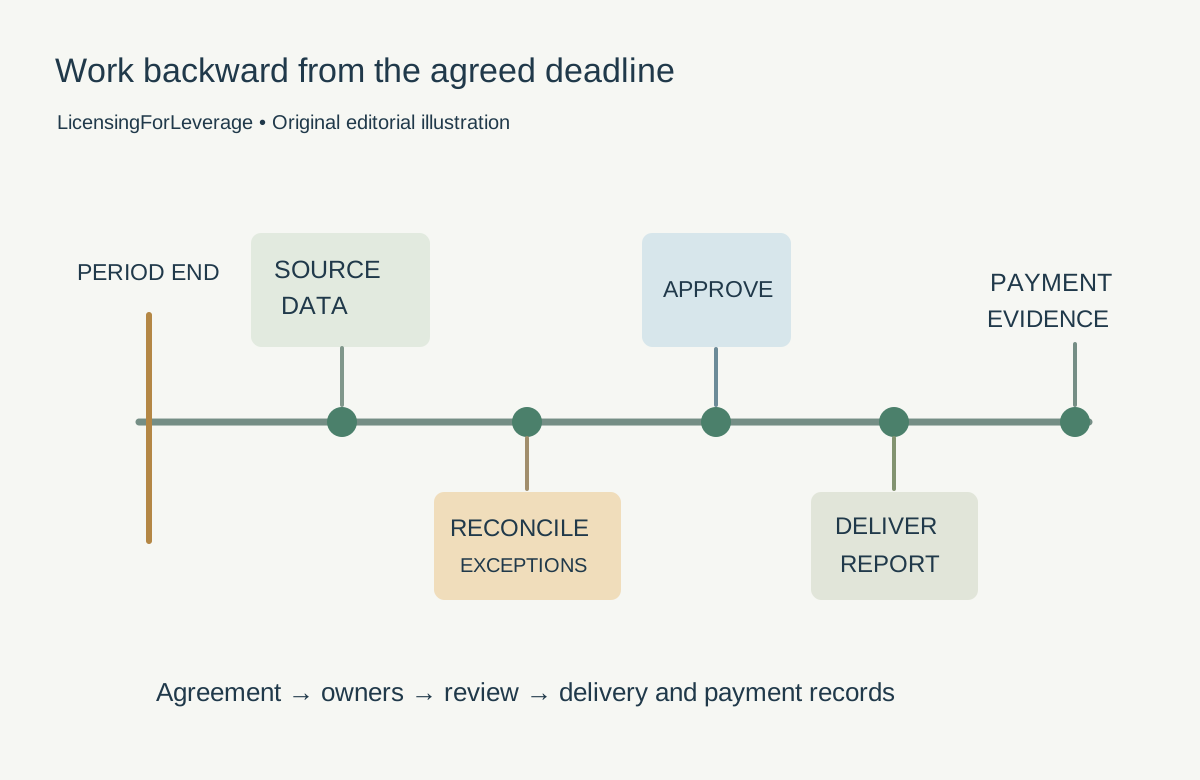
The original reporting illustration connects a period-end marker to data extraction, reconciliation, approval, report delivery, and payment evidence. The spacing is conceptual. No deadline in the picture is a recommended contract term, and the workflow must be adjusted to the agreement and applicable law.
| Calendar entry | Governing evidence | Responsible role | Completion record |
|---|---|---|---|
| Reporting period closes | Agreement definition of period | Licensee finance owner | Dated source-data export |
| Royalty base reconciled | Defined base and permitted deductions | Preparer and reviewer | Reconciliation with exceptions |
| Report approved | Agreed form and internal authority | Authorized approver | Approved report version |
| Report delivered | Notice and delivery requirements | Reporting owner | Delivery or receipt evidence |
| Payment transmitted | Payment clause and verified instructions | Authorized finance role | Payment reference and reconciliation |
| Records retained | Contract and applicable requirements | Records custodian | Controlled archive and retention schedule |
Extract obligations before building reminders
Read the executed agreement and amendments together. Record the exact clause for the reporting frequency, period boundaries, submission deadline, payment timing, delivery method, currency, and required information. If the agreement uses defined terms such as Net Sales, copy the definition into the working reference with its clause number instead of substituting your preferred accounting meaning.
The WIPO licensing checklist identifies reporting and audit questions as matters to address in a license. That is a negotiation and review aid, not a universal royalty-reporting rule. Your calendar must reflect the actual rights and obligations the parties agreed, with qualified counsel resolving ambiguity.
Create an exception list for missing or conflicting terms. For example, a contract may specify quarterly payment without clearly describing the report format. Do not silently invent a binding format in a spreadsheet and assume the other party accepted it. Ask the authorized people to resolve the gap through the appropriate contractual process.
Distinguish five dates that often get merged
The end of the sales period determines which activity belongs in the report. The internal data cutoff determines when the preparer obtains the first export. The report due date determines delivery timing. The payment due date governs the money movement. A records-retention date concerns how long supporting evidence remains available. These dates may be related, but they are not interchangeable.
Specify the time zone and treatment of weekends or holidays only as supported by the agreement and legal advice. If a deadline falls on a bank holiday, do not assume an automatic extension. Plan internal work early enough to meet the governing obligation, and ask counsel about uncertain wording rather than letting a calendar application decide.
For an illustrative workflow, suppose a report and payment are contractually due thirty days after quarter-end. The business might schedule extraction, review, and approval earlier within that period. Those internal targets provide room for corrections; they do not change the contractual deadline or create a standard thirty-day term for other licenses.
Define the data needed for the royalty base
Map each field in the agreed report to a source system and owner. Depending on the agreement, this may involve product identifiers, territory, channel, units, gross amounts, permitted deductions, returns, sublicense receipts, or other defined activity. Include only what is needed and authorized; more customer data does not automatically produce a better audit trail.
Document the calculation sequence using a small fictional sample. If a royalty applies to a defined net-sales amount, identify which adjustments are expressly permitted and how each is evidenced. Avoid importing ordinary business expenses into the deduction list just because they appear in the financial accounts. The contract definition controls the contractual calculation, subject to applicable law and professional review.
WIPO’s technology transfer agreements resources discuss licensing structures and model materials that require customization. Use them to prepare questions about the agreement, not to replace the negotiated definition with a generic model. A business team should be able to explain the data flow without making unauthorized legal interpretations.
Reconcile before seeking approval
Compare the proposed report with the source records for the covered period. Identify duplicate transactions, missing product mappings, unexpected negative amounts, and adjustments posted after the initial export. Preserve the original extract and record the changes rather than overwriting the evidence that explains how the final number was reached.
Create a short exception log with the transaction reference, issue, amount affected, responsible person, and resolution. A return recorded after the period closes may need treatment under a specific clause; it should not simply disappear into an unexplained deduction. If the answer is unresolved near the deadline, escalate promptly under the agreed process instead of assuming that silence extends the deadline.
Have a reviewer other than the preparer check material calculations where the organization’s controls allow. The reviewer should be able to trace a sample from the report back to the relevant transaction evidence and from source activity forward into the report. Record the review scope so an approval is more informative than a name beside a checkbox.
Keep reporting and payment evidence connected
Assign a version identifier to the approved report and reference it in the payment reconciliation. If a report is corrected, preserve the earlier version, the reason for the change, and the correspondence explaining the correction. Do not erase a discrepancy merely because the parties eventually agree on the amount.
Verify bank-instruction changes through an established independent channel and the organization’s payment controls. A new account number in an email should not bypass those controls just because the report is due. Maintain delivery evidence for the report separately from proof of payment: a successful bank transfer does not show that the contractual reporting package reached the right recipient.
For cross-border arrangements, obtain qualified tax and legal advice about withholding, documentation, currency conversion, and other relevant requirements. Do not choose an exchange rate source or deduction treatment by convenience when the agreement specifies something else. If the documents are silent, raise the issue before the first live reporting cycle.
Build a controlled evidence archive
Keep the agreement, amendments, report versions, source extracts, calculation workbooks, approvals, delivery records, and payment references together under appropriate access controls. Name a records custodian and a backup. Use a retention schedule that accounts for contractual and applicable legal requirements; this article does not prescribe a universal number of years.
The WIPO Exchanging Value training manual discusses financial reporting and inspection provisions in licensing arrangements. Specific examples in that manual are not automatically your audit rights. Counsel should review notice, scope, confidentiality, auditor selection, cost allocation, and any limits before an audit request is made.
Keep quality control records linked where the agreement requires them, but do not collapse every obligation into the royalty spreadsheet. Brand approvals, product compliance, training standards, and corrective actions may have their own owners and schedules. Receiving royalties does not establish that those separate obligations have been fulfilled.
Rehearse the first close
Run a dry exercise with sample transactions before a real deadline. Ask the preparer to produce the report, the reviewer to trace the calculations, and the approver to confirm the delivery package. Record how long each step actually takes and where access or definitions are missing. Adjust internal lead times while preserving the contractual requirements.
What if there were no sales?
Check the agreement for nil-report obligations, minimum payments, and other duties that may continue without sales. Do not assume a zero royalty calculation removes the need to report or satisfies all payment requirements.
Can a calendar reminder serve as proof?
A reminder proves only that a reminder was created. Keep evidence of the completed obligation, such as the approved report, delivery confirmation, and payment reconciliation.
What should I do first?
Extract the next reporting and payment clauses into a one-page worksheet with owners and open questions. Review it with the finance lead and counsel, then use the LicensingForLeverage article library for related licensing preparation.
Legal and tax disclaimer
This guide is educational operational planning, not legal, tax, accounting, or investment advice. Have qualified advisers review your agreement and circumstances. It does not guarantee royalties, passive income, earnings, enforceability, audit recovery, or a particular tax result.
Turn the idea into a business plan.
LicenseOS guides you from asset discovery through pilot planning and builds your decisions into a living licensing business plan.
Start building your planThis article provides general educational information and is not legal, tax, or financial advice. Licensing and franchise laws vary by jurisdiction and structure. Consult qualified professional advisors before offering or entering a licensing arrangement.